How Much Does Raising Cane’s Pay
We examine the financial landscape of this popular chicken chain so applicants can set clear expectations. Our aim is to offer a direct, transparent view of wages and benefits for team members across the United States.
We break down typical hourly rates, entry-level ranges, and factors that influence earnings. By comparing market trends and regional differences, we help readers align their goals with what the employer offers.
Whether someone seeks part-time shifts or a path to management, understanding the compensation model is the first step. We present practical insights so candidates can make informed choices about their next move at raising cane.
Understanding How Much Does Raising Cane’s Pay
We present verified hourly figures and range details to give clear insight into employee compensation. The company reports an average hourly rate of $11.63 for crew members across the United States.
Hourly wages vary by location and role. Reported pay spans from about $8.52 on the low end to $18.09 as the highest hourly rate recorded. This range reflects local cost differences and specific job responsibilities.
Many raising cane employees note that title matters: entry-level staff earn toward the lower end, while a manager may receive higher hourly figures or different salary structures. We use this data so cane employees can compare their earnings to market norms.
- Average hourly: $11.63
- Range: $8.52 – $18.09 per hour
- Highest reported: $18.09 per hour
| Role | Typical Hour | Notes |
|---|---|---|
| Entry-Level | $8.52–$12.00 | Regional variation |
| Manager | $13.00–$18.09 | Different pay structure |
| Average | $11.63 | Company-wide data |
Average Hourly Rates Across Different Job Roles
Below we map typical hourly earnings by title to clarify differences between entry-level and leadership roles. Our focus is to make compensation clear so applicants can set realistic expectations for the year.

Entry-Level Positions
Entry-level job titles often include cashier and crewmember. A cashier earns about $9.63 per hour on average. This role is a common starting point for new hires and part-time staff.
- Cashier average: $9.63 per hour
- Entry roles emphasize service and reliable attendance
Management Roles
Managers carry extra duties for the restaurant and see higher compensation. A restaurant manager averages $15.53 per hour. That gap between manager and crew mirrors industry norms.
| Role | Average Hour | Notes |
|---|---|---|
| Restaurant Manager | $15.53 | Oversees daily operations |
| Cashier | $9.63 | Typical entry-level job |
| Company Average | $11.63 | All employees, across roles |
Comprehensive Benefits and Perks for Crewmembers
Here we detail the perks that help crew members manage health, save for retirement, and invest in education. The overview focuses on concrete benefits that affect total compensation and job satisfaction.
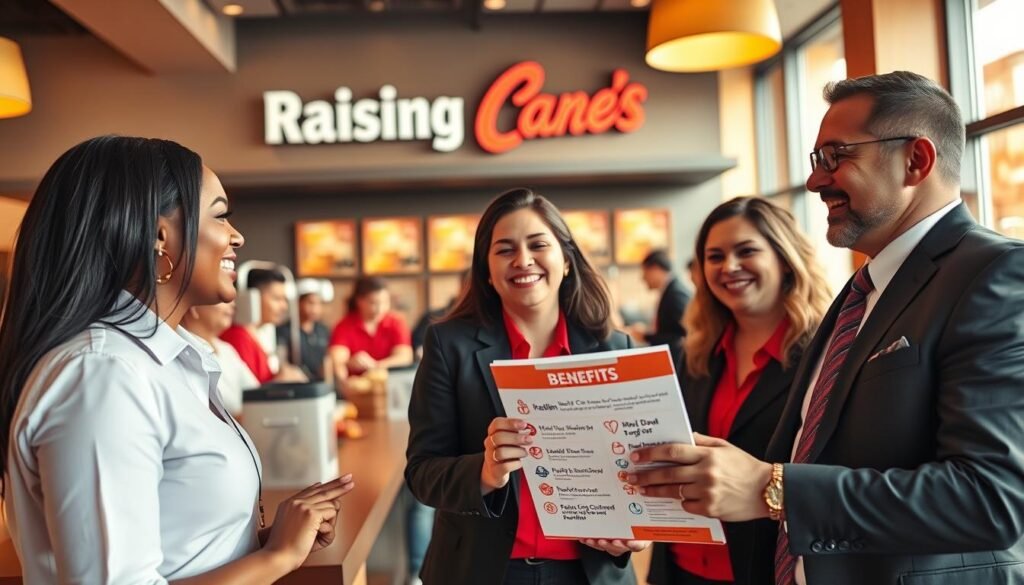
Health and Financial Wellness
The company offers an affordable healthcare membership through River Health. This gives many employees access to basic medical support at lower cost.
Eligible crewmembers and managers can join a 401(k) plan with an employer match. That option helps staff build long-term savings beyond hourly salaries.
Paid Time Off and Scheduling
Flexible scheduling and weekly pay are standard. These features help those who balance school or family responsibilities with their job.
Additional Employee Perks
Tuition reimbursement supports continuing education while on the payroll. Other perks include pet insurance, Verizon cell discounts, and travel deals with American Airlines.
- 401(k) with employer match for eligible crew and manager roles
- River Health affordable healthcare membership
- Tuition reimbursement to support ongoing education
- Pet insurance, Verizon discounts, and travel savings
- Flexible scheduling and weekly pay to fit varied lifestyles
| Benefit | Available To | Notes |
|---|---|---|
| 401(k) Match | Eligible crewmembers, manager | Helps long-term savings |
| Healthcare (River Health) | All employees | Affordable membership program |
| Tuition Reimbursement | Crew and managers | Supports education while employed |
Evaluating Employee Satisfaction and Workplace Culture
By combining review scores and frontline comments, we highlight what life is like for crew and managers. Our focus is on clear, practical signals that influence whether a job fits an applicant’s goals.
Insights into Daily Work Life
Current data shows a Fair Pay score of 3.0 out of 5 and an overall satisfaction rating of 3.8. These numbers suggest a generally positive restaurant environment with room to improve compensation and retention.
Many raising cane employees cite fast service pace and strong teamwork as main positives. A customer service cashier in Pearland, Texas noted that stress peaks during rush hours, but coworkers often make shifts manageable.
Managers face added pressures: hiring challenges, training new staff, and balancing schedules can affect day-to-day culture. Understanding these realities helps when weighing compensation against workplace experience.
| Metric | Score | Typical Notes |
|---|---|---|
| Overall Satisfaction | 3.8 / 5.0 | Positive teamwork, steady service environment |
| Fair Pay | 3.0 / 5.0 | Wages vary by region; room for improvement |
| Common Feedback | N/A | Fast pace, strong camaraderie, manager workload affects mood |
Comparing Compensation Against Industry Competitors
To clarify competitive positioning, we measure compensation at this chain against several large national employers.
We compare the company to The Kroger Company, Darden Restaurant Group, and Wal‑Mart Stores, Inc. Our analysis uses available data to benchmark salaries and total benefits for the year.
A typical manager salary here is evaluated alongside similar roles at those employers. Overall, reported salaries and pay remain competitive when benefits are included.
Workforce composition also matters. This chain reports 64% male and 36% female employees, a split we contrast with Wal‑Mart and other large employers to understand staffing trends.
- We assess base salary, benefits, and total compensation against peers.
- Benchmarks help candidates see where their pay and career growth may land.
| Employer | Typical Salaries | Notes |
|---|---|---|
| Raising Cane | $9–$15 avg | Competitive benefits for the year |
| The Kroger Company | $10–$16 avg | Large retail benchmark |
| Darden Restaurant Group | $9–$17 avg | Restaurant sector comparison |
Final Thoughts on Pursuing a Career at Raising Cane’s
We summarize the key findings so you can weigh career choices at this well-known chicken chain. If you seek a full- or part-time job, the profile here shows clear wage ranges and supportive benefits that matter.
Our review highlights typical salary levels, health and retirement options, and schedules that suit students and families. These features help you judge total compensation and daily work expectations.
The cane culture blends teamwork with training pathways for managers and entry-level crew. We recommend contacting your local manager for the most current details on openings and pay before applying.